EV Adoption in Logistics 2026:

Benchmarks, Real Data, and What Comes Next 

EV Industry Report 2026

EV industry report PNG

A new industry report based on insights from 120+ logistics professionals.   

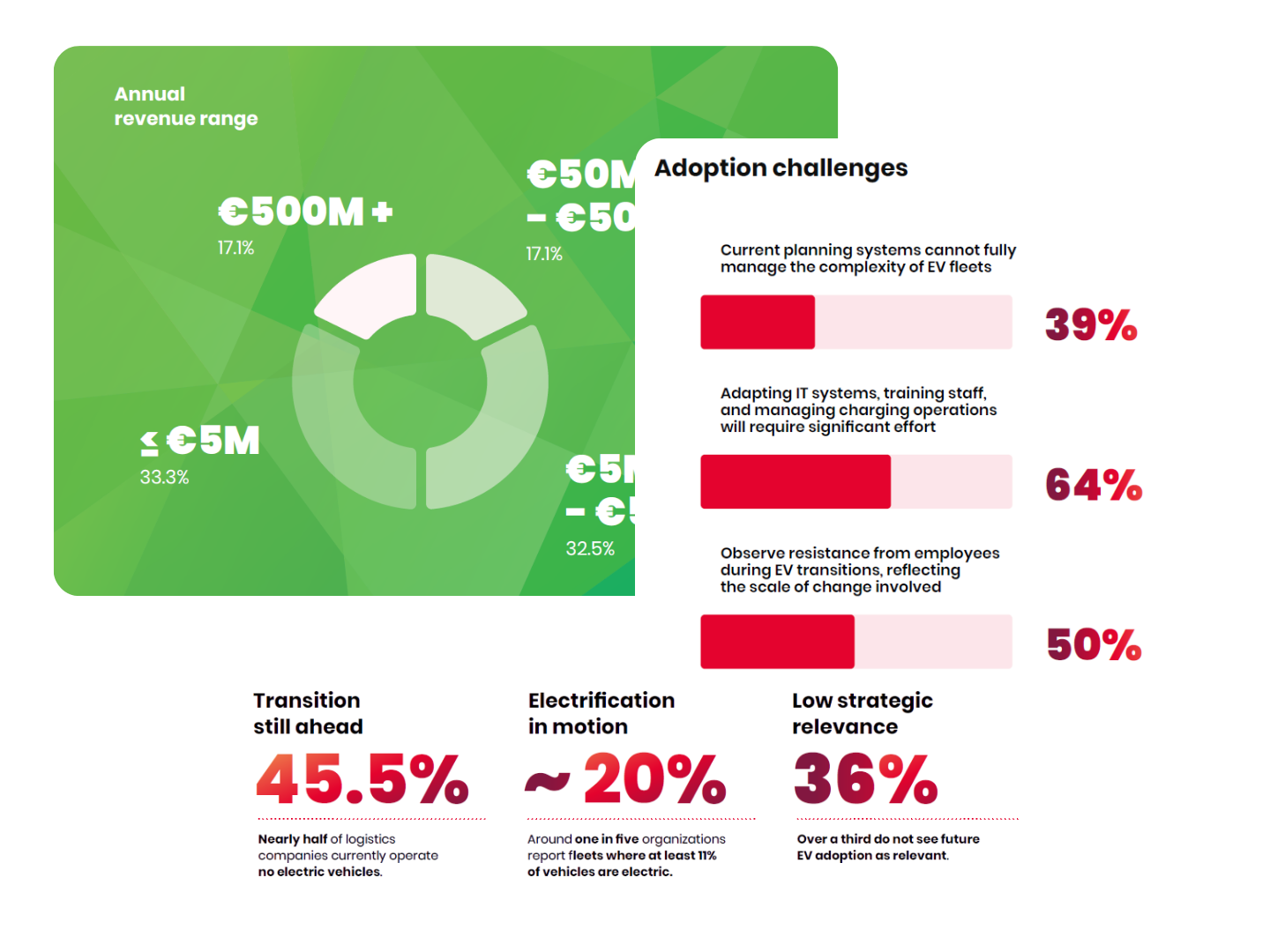
The logistics industry knows the shift to electric is unavoidable. EU targets, tightening city regulations, and rising customer expectations are raising the pressure. Yet despite this urgency, nearly half of companies still operate zero EVs, and many haven’t included any EV strategy in their 2030 plans.

Why?

Our new report reveals the real-world obstacles, the hidden costs, and the operational complexities that are slowing down EV adoption — along with the opportunities early movers are already capitalizing on. 

The Highlights

What's inside the Report

icon_analysis-72

Why infrastructure is still the bottleneck

With 90% of commercial chargers privately owned and fewer than 2,000 public stations supporting heavy‑duty vehicles across Europe, fleets face a reality far from ready. Reaching 2030 goals will require ~50,000 HDV‑compatible stations and €3.5 billion in investment. The report breaks down what this means for fleet planners today.
icon_moneybag_dollar

The barriers slowing electrification

Despite momentum, TCO remains the biggest hurdle: only 30% of EV truck sales in Europe are cost‑competitive today. Add to that 84% of fleets worried about long‑term value retention, and you get a clear picture of why so many organizations are hesitating and what they’ll need to move forward.

icon_star_rating

Where early movers find advantages  

How regional operators, mixed fleets, and larger fleets (200+ vehicles) are leading EV adoption, and why some smaller companies with revenues below €5m already report fleets with 30%+ EVs or aim to reach this by 2030 – showing that electrification is driven more by operational fit and strategy than by size alone.

icon_truck

A practical roadmap for electrification

High‑level recommendations drawn from the report: from starting with high‑volume, low‑mileage routes with depot returns, to using specialist EV simulation tools and piloting real‑world routes before scaling. The report also outlines the role of EV‑specific route planning and optimization software in managing hybrid fleets and reducing TCO over time.

See how your fleet compares to the rest of the industry.

Get the complete analysis to understand where fleets are struggling, where leaders are advancing, and what your next steps should be.